


A | 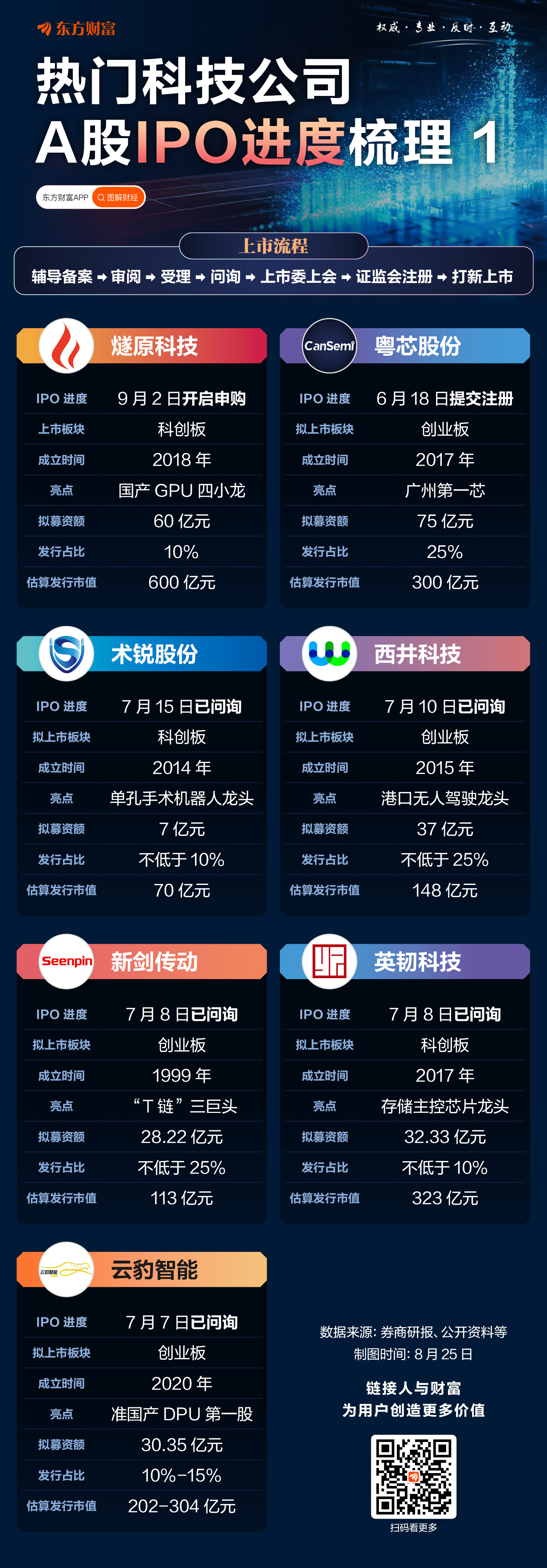
 9月2日,国产GPU四小龙之一的燧原科技正式开启科创板申购,拟募资60亿元。 A South Korean company has begun production at a huge new solar panel factory in Georgia even as industry leaders say surging Asian imports could dampen efforts to make more solar components in the United States.Qcells, a unit of South Korea’s Hanwha Group, said Wednesday that it can now turn out enough solar panels to generate 5.1 gigawatts of power yearly at a two-factory complex in the northwest Georgia city of Dalton. That's almost 40% of U.S. solar panel capacity, according to figures from the Solar Energy Industries Association. Qcells' opened its first factory in 2019 and an even larger plant in phases since, what the company describes as the largest solar investment in American history. “It’s another milestone as we as a company really strive to become a global leader and a U.S. leader in solar manufacturing," said Scott Moskowitz, Qcells head of market strategy and public affairs, speaking with The Associated Press after a plant tour Monday.The company says its new plant is the first solar module factory in the U.S. to begin production since passage of President Joe Biden’s signature climate legislation. Qcells' $208 million investment again shows how federal incentives are spurring a nationwide boom in renewable energy and electric vehicles.Industry jitters about a flood of cheap solar panels from overseas show how dependent on federal policy the solar industry remains. That's a threat in part because former President Donald Trump, the frontrunner for the 2024 Republican nomination, is hostile to renewable energy.Qcells leaders say the new plant showcases more efficient equipment and processes, part of a much larger investment intended to bring key steps in solar manufacturing to the U.S. A solar panel, or module, is assembled from solar cells most commonly made from wafers cut from ingots of polysilicon. Today, the company's solar cells are imported from Asia. But 30 miles (50 kilometers) south of Dalton in Cartersville, Qcells is building a $2.3 billion complex to take polysilicon refined in Washington state and make ingots, wafers and solar cells — in addition to 3.3 gigawatts of solar modules. That plant is scheduled to open in phases starting next year.Currently, no silicon ingots or wafers are made in the U.S. But Biden's Inflation Reduction Act, besides offering a extra tax credit on American-made solar equipment, lets manufacturers earn incentives for every unit of polysilicon they refine and every wafer, cell and module they make. For example, Qcells earns a tax credit of 7 cents per watt for every panel it makes in Dalton, or $34.30 for every 490-watt residential panel made.Even with that boost, solar industry leaders warn, factories will struggle to compete with a new spike in cheap Asian imports. They're again urging federal officials to investigate whether solar panels are being dumped at unfairly low prices. Previous investigations have led to anti-dumping tariffs on panels made in China and Taiwan.U.S. officials shouldn't regard the spike as a normal market fluctuation, said Mike Carr, executive director of the Solar Energy Manufacturers for America Coalition, a group that includes Qcells. He argues Chinese component makers are pushing out cheap modules from southeast Asian factories, tanking panel prices to ensure Chinese dominance and smother U.S. manufacturing.“This is likely to be the No. 1 new energy source in the 21st century," Carr said. "It’s already cheaper than pretty much anything else to install. It is the path to meeting our climate goals. So I think it becomes a real national security kind of concern. The way OPEC is in oil markets, we don’t want to allow China to become that same controller of supply in solar.”Qcells sees current low prices as a “near-term challenge" in achieving economies of scale and serving a long-term market, Moskowitz said. Beyond trade policy, he said, requiring federal agencies to buy American-made products and promoting panels produced with fewer carbon emissions could bolster Qcells.Politics envelops the solar industry. Vice President Kamala Harris visited the plant earlier this year. At the state level, Republican Gov. Brian Kemp has wrestled with Democratic U.S. Sen. Jon Ossoff over political credit for electric vehicle and renewable energy investments flowing to Georgia. “Out of all the places Qcells could have gone, they chose to operate and expand here in Georgia because of our unrivaled assets and the competitive package we put together,” Kemp said in a statement.Ossoff and fellow Georgia Democratic Sen. Raphael Warnock note they authored the component incentives that benefit Qcells, emphasizing federal policy. “Our state is emerging as the advanced energy capital of the nation, thanks to federal infrastructure and manufacturing policies that are benefiting Georgia more than any other state,” Ossoff said in a statement.Qcells, for its part, praises both state and federal assistance.“To build these markets up and to have them work, you need a whole government approach," Moskowitz said.。

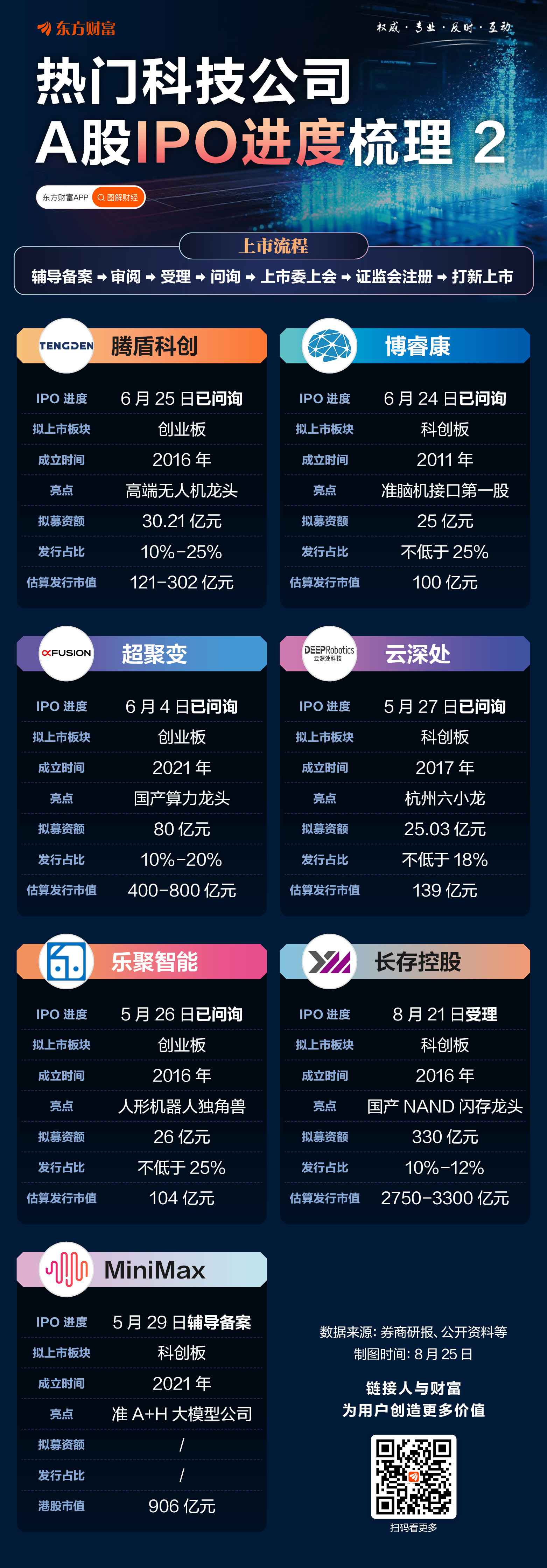
B | 这家深耕AI芯片赛道的硬核科技企业,成功站上资本市场的核心舞台。而燧原科技的亮相,仅仅是本轮A股科技IPO盛宴的开端。 半导体领域IPO梯队已然成型,优质企业密集闯关资本市场。被誉为“广州第一芯”的粤芯股份,已于6月中旬提交注册申请;存储主控芯片龙头英韧科技紧随其后,在7月初进入交易所问询阶段。其中最具分量的当属长江存储控股,其IPO申请于8月21日获受理,330亿元的拟募资规模,有望刷新科创板募资纪录。 算力赛道同样高手云集,国产算力基础设施龙头超聚变蓄力冲刺上市,腾讯持股的云豹智能全力冲击“国产DPU(数据处理器)第一股”。前者深耕AI服务器与液冷算力底座,后者实现400Gbps DPU规模化落地,补齐算力硬件的国产关键环节。 机器人赛道更是百花齐放。人形机器人独角兽乐聚智能、四足机器人标杆企业云深处、单孔手术机器人龙头术锐股份,以及特斯拉Optimus核心传动供应商新剑传动,均已迈入IPO倒计时。 除此之外,各细分硬核赛道龙头纷纷提速上市进程。高端无人机领军企业腾盾科创、港口无人驾驶龙头西井科技、准“脑机接口第一股”博睿康均处于IPO问询阶段。港股大模型双雄之一的MiniMax,也在5月底完成A股辅导备案,有望成为国内通用人工智能大模型领域“A+H”上市标杆。

C | 从核心芯片、底层算力,到智能机器人、通用大模型,中国硬核科技企业正以空前密集的节奏登陆资本市场。对于投资者而言,这在捕捉科技成长红利的同时,也需理性甄别技术迭代与行业竞争带来的不确定性,审慎把握投资节奏。

D |  (文章来源:东方财富研究中心)。

E |
Current article:http://8j73.shouyouxumianpouluanteng.shop/list_iu67/00mh.html
Published on:10:51:18


